
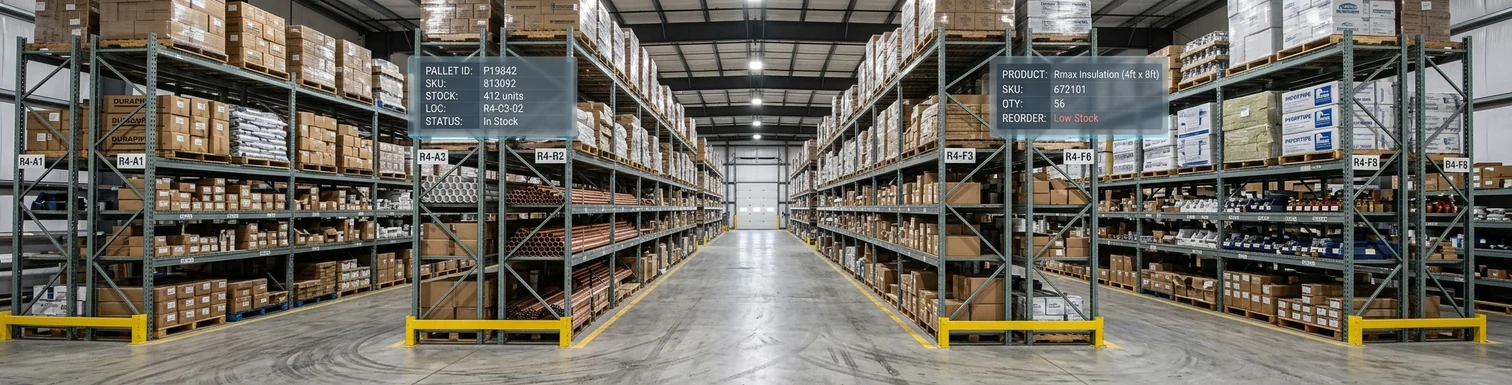
AI Product Content for Wholesale Distributors: Closing the Spec-to-Sales Gap
Wholesale distributors have a product content problem that is structurally different from anything a typical retailer faces. And it rarely gets discussed honestly in the AI content conversation.
The challenge is not just volume, though volume is part of it. A mid-size distributor in plumbing, building materials, or bathroom supplies might manage 20,000 to 50,000 SKUs across hundreds of supplier relationships. The content challenge is that the raw data behind those products (supplier spec sheets, product codes, technical attributes, EAN numbers) is almost never the content that converts. It stores what a product is. It does not explain why a buyer, trade professional, or end consumer should choose it.
That gap between spec and sales is where distributors leave the most ecommerce revenue on the table. AI closes it.
Why distributor product content is harder than retail product content
A pure-play retailer typically controls its product range, has direct supplier relationships, and can invest in photography and copywriting for hero SKUs. The challenge is scale and cost. AI product content generation addresses both.
Distributors face all of those challenges plus several that are specific to the wholesale model:
Supplier data quality is inconsistent. Each supplier delivers product data in a different format, at a different quality level, and on a different update schedule. Some suppliers provide rich spec sheets; others deliver a spreadsheet with a product code and a weight. An AI content pipeline has to handle all of these inputs and produce consistent output regardless of what it receives upstream.
The audience is split. Trade customers (plumbers, electricians, contractors) need technical precision: pipe diameters, pressure ratings, compatibility specifications. Consumer or B2C customers shopping the same catalogue need benefit-led language: “easy to install”, “compatible with standard UK fittings”, “ideal for family bathrooms”. A single product often needs two distinct content formats, maintained in sync as specs change.
Photography is sparse. Distributors rarely photograph products themselves; they rely on supplier imagery, which is often technical, inconsistently formatted, or simply absent. AI imagery generation fills this gap, producing lifestyle scenes and contextualised product visuals from supplier images or specifications, without a photoshoot.
The catalogue never stops changing. New supplier relationships, discontinued lines, revised specifications, seasonal ranges. A distributor catalogue is a living thing. The content backlog is not a one-time problem to clear; it is a continuous operational requirement.
What a PIM does, and what it does not do
Most distributors at any meaningful scale run a Product Information Management (PIM) system. PIM is the right tool for storing, organising, and distributing product data across channels. It handles the structured data layer: attributes, categories, media assets, channel feeds.
PIM does not write copy. PIM does not generate lifestyle imagery. PIM does not decide whether a product description should lead with a technical specification or a customer benefit. PIM is a container for product information: what it contains is only as good as what gets put in.
The AI content layer sits on top of PIM. It takes the structured data stored in the PIM system and generates the benefit-led descriptions, the SEO-ready titles, the search-friendly metadata, and the lifestyle imagery that the PIM system can then store and distribute. The two systems are complementary: PIM provides structure and distribution, AI provides the content quality that determines whether the products in that structure actually convert.
For distributors already running Akeneo, inRiver, Salsify, or a custom PIM solution, AI content generation integrates into the existing workflow, enriching the data at the point of ingestion and keeping the content layer current as the catalogue evolves. That workflow includes taxonomy assignment: merchi.ai’s automated product classification maps each SKU to the correct category position within your chosen hierarchy, whether that is Google Product Taxonomy, GS1, or a bespoke distributor classification structure, without manual intervention per product.
The dual-audience content problem
The spec-versus-benefit gap is most acute in distribution because the same product catalogue serves fundamentally different audiences with different buying motivations.
Consider a bathroom tap stocked by a plumbing distributor. The trade buyer (a plumber quoting for a bathroom renovation) needs to know: flow rate, connection size, cartridge type, compatibility with the existing water pressure in a UK domestic property. The end consumer browsing the same ecommerce site needs to know: does it look good, is it easy to clean, will it work with a mixer shower, is it available in brushed nickel.
Manual content processes typically write for one audience or the other, or produce a single description that serves neither well. AI content generation can produce both formats (the trade technical sheet and the consumer benefit description) from the same product data, at the same time, consistently across the entire catalogue.
This matters for distributors who are running hybrid ecommerce models: a trade portal and a consumer-facing website, both fed from the same PIM, both requiring different content standards for the same SKU.
AI product content at distributor scale: what it looks like in practice
An AI content pipeline for a wholesale distributor typically operates in three phases:
Phase 1: Data audit and schema design. Before any content is generated, the existing product data is audited. What does the supplier data actually contain? What attributes are consistently present and what is missing? What does the target output schema look like? What fields need to be populated for each product, in what format, for which channels? This phase defines the rules that the AI follows.
Phase 2: Backlog clearance. The existing catalogue (potentially tens of thousands of SKUs) is processed first. Products with missing or poor-quality content are prioritised. This is where the immediate commercial impact comes from: products that were previously invisible in search begin to appear; product pages that were bouncing visitors begin to convert.
Phase 3: Continuous operation. New products arriving from suppliers are processed automatically. Updated supplier specifications trigger content refreshes. The content layer stays current without manual intervention.
This is the pattern merchi.ai deployed for a UK home improvement retailer with a product catalogue and content gap that was blocking ecommerce performance. The platform cleared a 1,000-product backlog and contributed to 976% online revenue growth. That catalogue is smaller than most wholesale distributors; the approach scales directly to five or ten times that volume.
AI imagery for distributor catalogues
The imagery problem in wholesale distribution deserves specific attention because it is often the single biggest barrier to ecommerce performance and the hardest to solve manually.
Supplier imagery is typically one of three things: a white-background product shot (if you are lucky), a technical diagram, or missing entirely. None of these options drive conversion for a consumer browsing an ecommerce site.
AI lifestyle imagery generation produces contextualised product visuals (taps shown in bathroom settings, flooring products shown in room scenes, HVAC units shown in the plant rooms they are designed for) at a fraction of the cost and time of traditional photography. For a distributor with 36,000 SKUs, a photoshoot is not a realistic option. AI imagery is.
The output integrates into the PIM workflow: images are generated, formatted to the correct specifications, and stored against the relevant product records, ready for distribution across all channels.
What changes when you close the spec-to-sales gap
The commercial case for AI product content in wholesale distribution comes down to three things:
Search visibility. Product pages without complete, structured, benefit-led content do not rank. Products that do not rank do not sell online, regardless of how good the product is. Closing the content gap unlocks organic search traffic across a catalogue that was previously invisible.
Conversion rate. Spec-only product pages have high bounce rates. Buyers need enough information to make a purchase decision, and they need it in the right language for their role (trade buyer or consumer). AI content that speaks to the buyer’s actual question converts significantly better than a product code and a weight.
Operational cost. Manual product content at scale is expensive and slow. It typically runs between £15 and £25 per product when copywriting, data entry, photography coordination, and revision cycles are included. For a catalogue of 20,000 SKUs, that is £300,000 to £500,000 to get baseline content in place, before ongoing maintenance costs. AI content generation reduces this by an order of magnitude, with consistent quality across the entire range.
Getting started
The right entry point for a wholesale distributor varies depending on the current state of the catalogue and the existing tech stack. If a PIM is already in place, the integration question is the starting point. If the catalogue lives in a spreadsheet or a legacy system, there is a data readiness phase before AI content generation can operate effectively.
merchi.ai works with retailers and distributors across home improvement, flooring, bathroom, and building materials. If you have a large catalogue and a content gap that is affecting ecommerce performance, book a 30-minute conversation and we will walk through what the pipeline would look like on your specific catalogue.
For distributors in the workwear and PPE sector, where content must accurately reflect EN certification standards and protection classifications rather than just product benefits, see our companion post: AI product content for workwear and PPE suppliers.
Frequently Asked Questions
Can AI generate product content from supplier spec sheets?
Yes. AI content generation systems can ingest product data from supplier spec sheets, spreadsheets, EAN databases, and existing PIM exports, regardless of how inconsistently formatted the input is. The AI normalises the input and generates structured, consistent output according to the target schema. The quality of output improves with richer input data, but the system handles thin input gracefully.
How does AI product content integrate with a PIM system like Akeneo or inRiver?
AI content generation sits upstream of PIM in the data flow: it enriches product data before or alongside ingestion into the PIM system. In practice, this means the AI pipeline processes incoming supplier data, generates descriptions, attributes, and imagery, and outputs to a format that the PIM system can ingest. Most PIM systems have APIs that allow this integration to run automatically at the point of new product creation or supplier data update.
Can AI produce both trade (technical) and consumer (benefit-led) content for the same SKU?
Yes. The same product data can be processed through different output templates: one configured for technical precision (trade spec sheet format), one configured for benefit-led consumer copy. Both outputs are stored against the same product record in the PIM and distributed to the appropriate channels.
How does AI handle missing supplier data?
It depends on how much data is missing. For products with some structured attributes (category, dimensions, key specs), AI can generate reasonable descriptions and flag gaps for manual review. For products with almost no data beyond a product code, the output will be limited and should be reviewed before publication. The audit phase of any AI content implementation identifies which products in the catalogue have sufficient data for AI processing and which need supplier data enrichment first.
What languages does AI product content generation support?
merchi.ai generates product content in 40+ languages. For a distributor operating across multiple markets, or a UK business selling to trade customers across Europe, the same product record can generate English, French, German, and other language versions from a single processing run.
Is AI-generated product content compliant with the EU AI Act?
The EU AI Act’s transparency requirements for AI-generated content (Article 50) come into force on 2 August 2026. merchi.ai publishes AI-generated content under the AI Provenance Protocol, an open standard that makes AI content attribution machine-readable and verifiable. This is the recommended approach for distributors who need to demonstrate compliance with AI content transparency requirements.
How long does it take to process a large wholesale catalogue?
Processing time depends on catalogue size and data quality. A catalogue of 10,000 SKUs with reasonable supplier data can typically be processed through an AI content pipeline in days rather than months. The bottleneck is usually data preparation (cleaning and normalising supplier data before AI processing) rather than the generation step itself.