
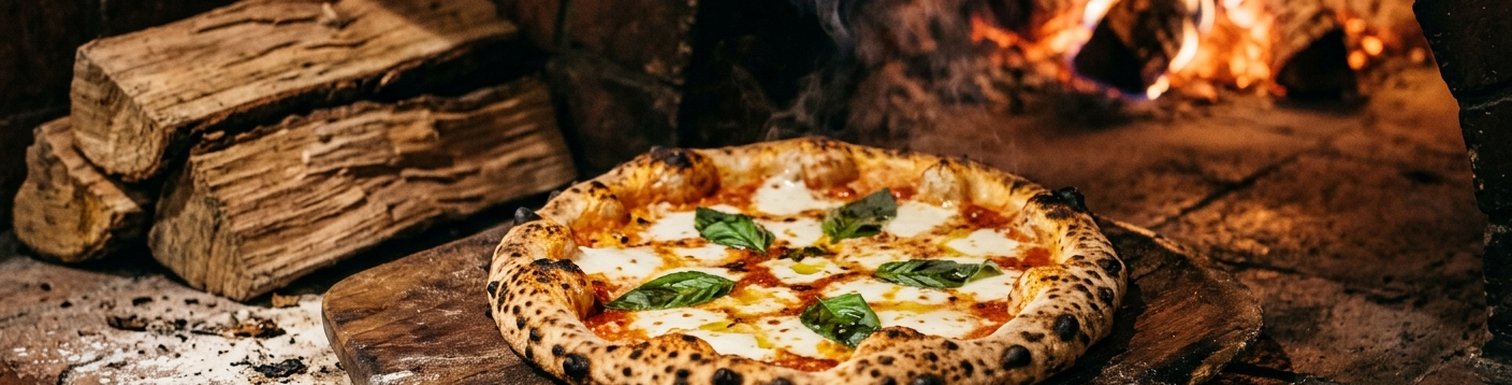
Enterprise-Grade Digital and AI for a Four-Venue Pizzeria: How We Unglitched Wood Fire Smoke
Wood Fire Smoke is a family-owned Neapolitan pizzeria with four venues in Cheshire: Wilmslow, Macclesfield, Congleton and Sale. Between them they serve around 320 covers a night. There is also WFS At Home, an online shop selling pizzas that are cooked in the wood-fired oven, packed, and delivered across the UK to finish at home.
Sam and Charlotte, who own the business, had built something people love. What they did not have was the digital operation of a business that size. In August 2026 they started working with Unglitch, the services arm of merchi.ai. This is what we found, what we changed, and what has happened since.
Where Wood Fire Smoke started
The restaurants were doing well. Their search presence came almost entirely from people who already knew the name. The audit found:
- Zero organic keywords tracked by Ahrefs, despite a domain rating of 25
- The online shop running on a myshopify.com address, separate from the main site
- 16 shop products with no SEO titles, no meta descriptions and no image alt text
- Four bundle boxes, including the Pizza Night Box, with no description at all
- No LocalBusiness schema on any of the four location pages
- No blog, and nothing that answered the questions people ask about pizza
- Customer contacts split across three systems: SevenRooms for bookings, Lightspeed at the till, and Shopify for At Home
None of this is unusual for a hospitality business. A large group fixes it with a digital team, a CRM manager and an agency. A four-venue business has to do it with the people it already has.
What we did
Search and AI visibility
We moved the shop to shop.woodfiresmoke.uk, so the restaurant and the At Home brand build authority together. Each location page now carries LocalBusiness schema, and the site has robots.txt and llms.txt files written for AI crawlers. We created a Wikidata entry so AI assistants have a structured, trusted record of the business and its venues. All four Google Business Profiles have been optimised.
On the shop, every product now has a proper title, meta description, alt text and FAQs covering storage, finishing, allergens and delivery. The bundle boxes have descriptions. Products that had a single photo now have several, and the At Home homepage has a social video showing the pizzas being made.
Then we built the content. Keyword research found a clear opening: high-volume, low-competition questions about Neapolitan pizza, ingredients and cooking at home. We have now written and published 27 blog posts. They range from what nduja is to how long pizza lasts and how to cook a part-baked pizza.
One view of the customer
The marketing list was the biggest hidden problem. Guests who booked through SevenRooms, paid through Lightspeed and ordered from At Home were three different records in three different systems.
We imported all three into FluentCRM to build a single customer view, then connected Shopify so the list updates automatically when an At Home customer subscribes. Lightspeed and SevenRooms are next. New sign-up forms on both sites capture which venue a guest belongs to, and a welcome email series greets new subscribers and existing regulars differently.
Reviews and a bit of competition
Google reviews matter more to a restaurant than almost any other signal. After signing up, each guest is now sent to the Google review page for their own venue. We built a dashboard that shows sign-ups and new Google reviews by venue, day by day. It is shown on the till system in every restaurant, so the four teams can see how they compare. A little friendly competition between Wilmslow and Sale does more than any memo.
Gift cards for Christmas
Vouchers became Gift Cards, with a simple chooser on both sites. They went live in November, in time for the busiest gifting weeks of the year.
AI in the hands of the team
The last workstream matters most for what happens next. We are setting up Max and Charlotte with Claude Cowork, using the skills we built during the project: writing blog posts to the house style, producing product content, and running the reporting. As we build more skills, we hand them over. The aim is for the team to run their digital operation themselves, with AI doing the heavy lifting.
The results so far
The blog went live in late October. In the 26 days before launch, woodfiresmoke.uk averaged around 1,700 Google search impressions a day. Over the last week it has averaged over 5,200 a day, roughly three times as many.
- 132,000 search impressions in the last 28 days
- 22,700 impressions in Google’s generative AI features over the same period
- About 90,000 impressions from the new blog posts in their first four weeks. “How long does pizza last” alone appeared 23,500 times, at an average position of 5.7.
- 289 new marketing sign-ups in six days, growing the subscriber list by 8%
- 27 blog posts published, and all four Google Business Profiles optimised
- Gift cards live ahead of Christmas
To be honest about the numbers: clicks have not tripled. Total clicks were flat across the two periods, at around 4,700 each. The new posts answer informational questions, and many of those answers are now read directly in AI Overviews rather than clicked. That is the reason for building the customer list alongside the content. Visibility puts the name in front of people. The sign-up forms, emails and gift cards turn that attention into covers and orders. We expect clicks to follow as the posts build authority, and we will report back.
What this shows
None of the individual pieces here is new. Large hospitality groups have had a single customer view, review programmes, structured search content and CRM automation for years. What has changed is the cost. With AI doing much of the research, writing and build work, a four-venue business can have all of it, run by a small team, in a few months.
That is the Unglitch proposition. We look at how a business actually works, find the glitches that hold it back, and fix them with the right mix of technology and AI. Then we put the tools in the team’s hands, so the improvement keeps going after we leave. It works for SMEs, and it works for mid-sized businesses that want enterprise capability without an enterprise budget.
Talk to us about your business
If you run a hospitality, retail or consumer business and recognise some of these glitches (split customer data, invisible search presence, or a team that knows AI matters but has not had the time to use it), book a call. Thirty minutes, no pitch. We will tell you honestly where we would start.
Read more about Unglitch and how we work with SEO, AEO and GEO.
Frequently Asked Questions
What is Unglitch?
Unglitch is the services arm of merchi.ai. It helps SME and mid-market businesses improve existing processes and build new ones with AI and technology, from search visibility and customer data to custom AI tools. Engagements start with an audit and end with the team running the new tools themselves.
Can a small restaurant group get a single customer view?
Yes. Wood Fire Smoke combined guest records from SevenRooms, Lightspeed and Shopify into one marketing list in FluentCRM, with Shopify now syncing automatically. You do not need an enterprise CRM to do it, but you do need someone to map the data and keep the connections running.
Does blog content help a restaurant appear in AI search?
It can. Wood Fire Smoke received 22,700 impressions in Google’s generative AI features in 28 days after publishing answers to common pizza questions. Structured location pages, a Wikidata entry and optimised Google Business Profiles help AI assistants describe the business accurately.
Why did impressions grow faster than clicks?
Many of the new posts answer simple questions, such as how long pizza lasts. Google often shows those answers directly in AI Overviews, so the searcher sees the brand without clicking. That visibility still has value, which is why it is paired with sign-up forms, email and gift cards to turn attention into bookings.
How long did the Wood Fire Smoke project take?
The engagement started in August 2026. The technical fixes and location pages came first, the blog launched in late October, and the customer data, review dashboard and gift cards followed in November. The AI handover to the team is ongoing.